Guide
Your fertile window explained
Last updated: July 2026
You cannot get pregnant on just any day. Each cycle has a short window, only about six days, when conception is possible. Understanding it takes a lot of the guesswork and pressure out of trying.
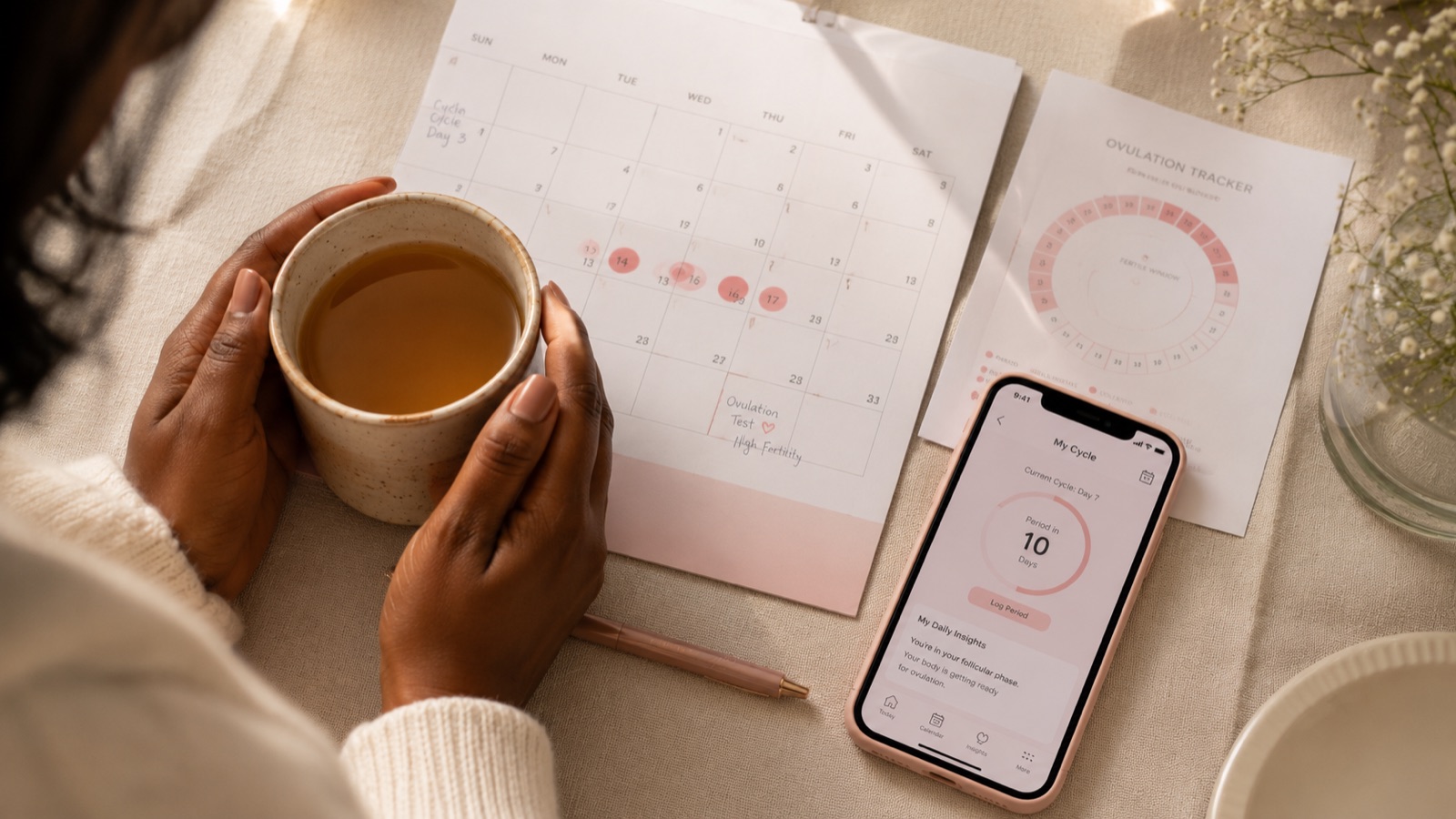
What the fertile window is
Ovulation is when an ovary releases an egg. That egg only lives for about a day. But sperm can survive inside the body for up to five days, waiting. So the fertile window is roughly the five days before ovulation plus the day of ovulation itself, about six days in total.
How to find it
In a regular cycle, ovulation happens about 14 days before your next period starts, not 14 days after the last one. So if your cycle is 28 days, ovulation is around day 14. If it is 32 days, it is around day 18. Our ovulation calculator does this maths for you.
Your body also gives signs: clear, stretchy discharge like raw egg white, a small rise in body temperature after ovulation, and for some women, a mild twinge on one side.
Timing without the pressure
You do not have to hit one exact day. Having sex every two to three days across the whole cycle naturally covers the fertile window, and it is far kinder than turning trying into a stressful schedule.
When to see a doctor
If your cycles are very irregular, very short, or very long, or you have been trying for a year (six months if you are over 35), see a doctor. It is a normal next step, not a failure.
Common questions
How many days a month can you get pregnant?
When is the best time to try to conceive?
Go further
The Trying-to-Conceive Blueprint
A private community for women trying to conceive, honest guidance, and a professional to ask.
See the program →