Guide
Starting solids: first foods, made simple
Last updated: September 2026

Solids start at around six months. The word that matters is "around". Your baby is ready when they can do three specific things, whatever the date on the calendar says. Three common behaviours look like readiness but are not. Knowing the difference saves most of the worry about this milestone.
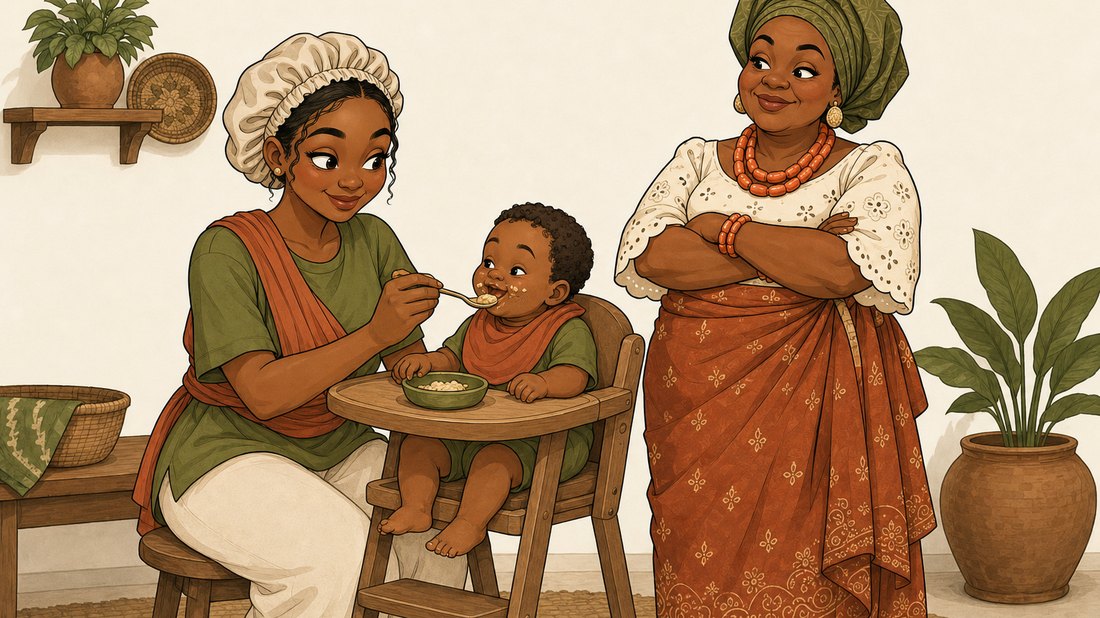
What are the signs my baby is ready for solids?
The National Health Service names three signs. They have to appear together, from around six months.
- They can stay sitting and hold their head steady, because swallowing safely needs an upright position.
- They can co-ordinate eyes, hands and mouth well enough to look at food, pick it up and get it in themselves.
- They can swallow food rather than pushing it back out with their tongue.
Which behaviours look like readiness but are not?
People read these as hunger. They are babies being babies. The National Health Service lists them: chewing their fists, waking more in the night, and wanting extra milk feeds.
Under all three sits one belief, and it is worth naming. It is that solids will make a baby sleep longer at night. Your neighbour may swear by it, but there is no evidence for it. It is the most repeated reason for starting early, and a little extra milk usually settles the waking that solids were being asked to fix. The feeding and sleep tracker shows you what the nights are actually doing.
Milk is still the meal
For a good while yet, solids are practice. Breast milk or formula stays the main source, and the first weeks of solids are about tastes, textures and learning to move food around the mouth.
The World Health Organization recommends exclusive breastfeeding for the first six months, and continued breastfeeding alongside food up to two years or beyond. It estimates that nearly 400,000 deaths of children under five could be prevented each year if that were universal. Solids are added alongside milk. Milk carries on.
Good first foods, from the market you already use
Any Nigerian market has what you need, with no baby aisle and no imported jars. Start with one food at a time, soft, and unseasoned.
- Mashed fruit: ripe banana, pawpaw, avocado.
- Soft-cooked starches: sweet potato, yam, plantain, soft rice.
- Well-cooked pap or ogi, thick enough to sit on a spoon rather than run off it.
- Mashed beans, and soft-cooked vegetables such as carrot or ugu blended in.
- Sips of water in an open cup with meals, from around six months.
Move on from smooth purée to mashed, lumpy and finger foods as soon as your baby can manage them. Staying on smooth food too long is a more common problem than starting lumps too early. Finger foods teach a baby to bite, chew and swallow pieces.
One habit carries most of this, and it lands on whoever cooks. Researchers in Kaduna State asked families how the work divides, and the answer was consistent.
The father provides the money; the mother buys the food and also prepares it for the child.
So everything below comes down to one move at the stove. Take the baby's portion out before the seasoning goes in. If somebody else is cooking, such as your mother-in-law, tell them, because this step turns family food into baby food.
What foods should my baby avoid?
- Leave out salt, including stock cubes, seasoning cubes and gravy. Most Nigerian kitchens trip on this one, because a cube goes into everything by habit. Babies' kidneys cannot handle salt. Take a portion out before you season the pot.
- Leave out sugar. It causes tooth decay and trains a preference you will be arguing with for years.
- Give no honey before one year, without exception.
- Avoid whole nuts and hard chunks. They are choking hazards. Ground or smooth nut butters are fine.
- Avoid unpasteurised milk and cheese, and cow's milk as a main drink before one year. Cow's milk in cooking or mixed into food from around six months is fine.
When should I give my baby peanut, egg and fish?
This advice reversed some years ago, and the old version is still repeated. The National Health Service says foods containing allergens, such as peanut, hen's egg, gluten and fish, can be introduced from around six months, one at a time and in small amounts so a reaction can be spotted.
Delaying them does not protect your baby. Introduce one, wait a few days, watch, then introduce the next. Offer it early in the day, so you are awake if something happens.
When to see a doctor
Get care now if your baby has swelling of the lips, tongue or face, a spreading rash or hives, vomiting straight after a new food, or any difficulty breathing. These are allergic reactions and they need care now, so do not wait for the morning. Also seek advice if your baby chokes rather than gags, refuses all food over several days, or is losing weight.
Common questions
When can a baby start solid food?
Will starting solids help my baby sleep through the night?
What are good first foods in Nigeria?
What foods should babies avoid?
Can I give my baby food from the family pot?
When should I introduce peanut, egg and fish?
How much should a baby eat when starting solids?
Sources
- Your baby's first solid foods, including the three readiness signs and the behaviours that are misread, National Health Service
- Foods to avoid giving babies and young children, National Health Service
- Infant and young child feeding: exclusive breastfeeding to six months and continued feeding to two years, World Health Organization
- Maternal and paternal involvement in complementary feeding in Kaduna State, Nigeria, Maternal & Child Nutrition, via PubMed Central, 2022
- Breastfeeding, World Health Organization
- Health and HIV in Nigeria, United Nations Children's Fund
Go further
The First Baby Playbook
A community for parents in the baby and toddler years, guidance on sleep, feeding and milestones, and a professional to ask.
See the program →