Guide
Your postpartum recovery timeline, week by week
Last updated: October 2026

Everything before the birth is about the birth. Then the baby arrives, and nobody has scheduled an appointment for your own body. This guide shows what each week usually looks like, what is normal in it, and how a caesarean recovery runs on a different clock.
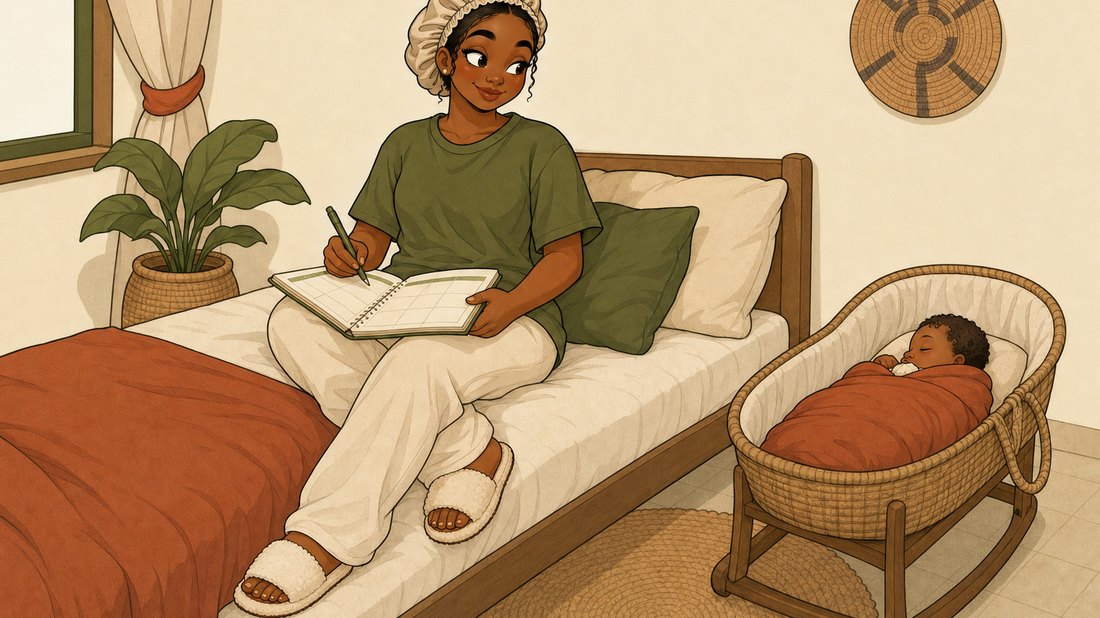
Week 1: the heaviest week
Bleeding, called lochia, is at its heaviest now, so you will need maternity pads. The National Health Service says to expect it to be quite heavy at first and to carry on for a few weeks. Afterpains, cramping as the womb shrinks back, are normal and often sharper while feeding.
Women describe the difference between normal and worrying bleeding by how it feels. That is understandable, and it is why worrying bleeding gets missed.
You'll feel it like water, like passing urine. The way it's coming out.
That description is bleeding that has already gone too far. Normal lochia takes hours to soak a pad. If a pad soaks in minutes, or you are reaching for the word "gushing", go in.
You are sore, you are not sleeping, and you are learning to feed a newborn at the same time. The most useful help anyone can give this week is to take a chore off you, and holding the baby comes second. If people are asking how to help, give them the kitchen and the laundry, and that includes whoever has come for omugwo.
Weeks 2 to 3: the fog
Bleeding lightens and changes colour, from red to brown to a pale discharge. Many women meet a wave of tearfulness and overwhelm around now. This is the baby blues, and it usually lifts within about two weeks.
If it does not lift, or it deepens, you are not failing. Postnatal depression is common and treatable, and the National Health Service treats it as an illness. The blues lift. Depression does not.
Weeks 4 to 5: some energy back
Most women start to feel a little more themselves. Short walks help. Hard exercise has to wait. The core and the pelvic floor are still healing, and pushing too early can turn a problem that would have resolved into one that needs treatment.
Week 6: the check that is about you
The six-week check is where somebody finally looks at how you are healing and how you are coping. Write your questions down before you go, because the appointment is short and the list evaporates in the room. Our check-up questions give you a list to start from, and the recovery checklist lets you tick off the first six weeks as you go. Ask about pain, sex, contraception, feeding and mood. All of it belongs there.
Raise one more point even if nobody brings it up. You can become pregnant again as soon as three weeks after birth. The National Health Service says this holds even if you are breastfeeding and your periods have not returned. Contraception belongs in the six-week check.
The six weeks are not a finish line. The American College of Obstetricians and Gynecologists argues that postpartum care should be an ongoing process rather than a single encounter, with contact in the first three weeks and a full assessment no later than twelve. Blood pressure problems, clots, infection and postnatal depression can all start after week six. Being discharged is not being signed off.
If you had a caesarean, the clock is different
A caesarean is abdominal surgery, and recovery takes longer than after a vaginal birth. The National Health Service guidance on recovering from a caesarean says to hold off on driving, exercise, carrying anything heavier than your baby, and sex. It says this may be for six weeks or so. Start each one only when you can do it without discomfort.
Watch the wound for redness, heat, swelling or discharge. Take pain relief on a schedule, and do not wait until it hurts. Staying ahead of the pain lets you move, and moving prevents clots.
What to eat and drink after a C-section
Eat normally once you are hungry. The National Health Service says you can eat and drink as soon as you feel hungry or thirsty after a caesarean. Choose foods with fibre, foods with iron and enough protein, and drink plenty of water. There is no special healing food, and no fruit or drink makes a wound or scar heal faster. Anyone selling you one is selling you something.
Eat fibre and drink fluids from the first day. Constipation after abdominal surgery is very common. It comes partly from the surgery and partly from the pain medication, and straining against a fresh incision is as unpleasant as it sounds. The National Health Service advice after birth is to eat plenty of fruit, vegetables, wholegrain cereals and wholemeal bread, and drink plenty of water. In a Nigerian kitchen that means beans, pawpaw, oranges, vegetable soups such as efo or ugu, oatmeal, brown rice and water through the day. If nothing has moved after a few days, ask your midwife or doctor for help. Do not strain.
Eat iron, because you lost blood. Women aged 19 to 49 need 14.8mg of iron a day, and a surgical delivery usually takes more blood than a vaginal one. Liver, beef, beans, dark green leaves such as ugu, and fortified cereals all help. Take any iron tablets away from tea, because tea reduces how much iron you absorb from the meal it sits with.
Eat enough protein and enough calories. Wounds are built from protein, and a woman eating too little while feeding a newborn heals slowly. Eggs, fish, chicken, beans, moi moi and groundnut all count. Leave weight-loss plans for later.
Can I eat bread after a C-section?
Yes. There is no reason to avoid it. Wholemeal bread gives you the fibre that white bread does not, and the National Health Service lists it among the foods that make passing stools easier after birth.
Is drinking milk good after a C-section?
Milk is fine. The National Health Service describes milk and dairy as great sources of protein and calcium. It does nothing specific for the wound or the scar. If it gives you gas, ease off it for a week, because gas is uncomfortable against a fresh incision.
Which fruit is good after C-section delivery?
Fruit that carries fibre and water, such as pawpaw, oranges, watermelon and banana. No single fruit speeds healing. The aim is to keep things moving so you are not straining.
What are the best drinks after a C-section?
Water, and more of it than feels necessary. Keep tea away from iron tablets and from meals you are eating for iron. Check with your clinician before taking any herbal preparation daily as a remedy.
Is hair loss, painful sex and leaking urine normal after birth?
Hair falls out in handfuls somewhere around month three or four, and it grows back. Your feet may have changed size permanently. Sex can hurt for months, so tell your doctor instead of putting up with it. Leaking urine when you sneeze is common and treatable, so do not accept it as the price of having a child.
None of these are emergencies. That is why they go unmentioned, and each woman thinks she is the only one.
When to see a doctor
Call your clinic or go to hospital if you have bleeding that soaks a maternity pad in an hour, bleeding that gets heavier again after lightening, fever or shivering, pain that gets worse instead of easing, a bad headache with vision changes, foul-smelling discharge, redness, heat or discharge at a caesarean wound, a hot, painful, swollen calf, or any thoughts of harming yourself or your baby. The full list is in the warning signs guide.
Common questions
How long does postpartum recovery take?
What to eat and drink after a C-section?
Can I eat bread after a C-section?
Is drinking milk good after a C-section?
Which fruit is good after C-section delivery?
What are the best drinks after a C-section?
How long does bleeding last after birth?
How soon can I get pregnant after giving birth?
Sources
- Your body after the birth, including bleeding, and how soon you can conceive again, National Health Service
- Recovering from a caesarean section, National Health Service
- Iron: how much women aged 19 to 49 need, and what affects absorption, National Health Service
- Optimizing postpartum care: why it should be an ongoing process rather than one visit, American College of Obstetricians and Gynecologists, 2018
- Postnatal depression, National Health Service
- Maternal mortality and the complications that account for most of it, World Health Organization
- Milk and dairy nutrition: protein and calcium, National Health Service
Go further
The 6-Week Postpartum Reset
A private community for new mothers, guidance on your body, your marriage and your mind through the first six weeks, and a professional to ask.
See the program →