Guide
Pregnancy, trimester by trimester
Last updated: October 2026

Pregnancy is counted in three stages, and each stage feels different. This guide covers what tends to happen in each one, which appointments and scans belong where, and what matters more in Nigeria than the international guides suggest.
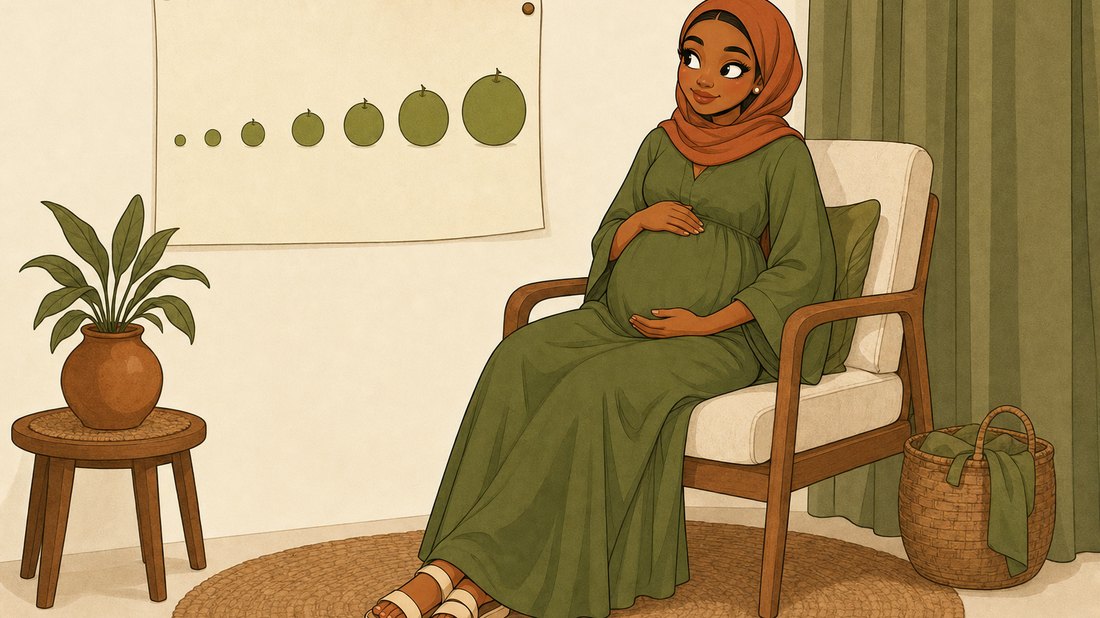
What are the changes that happen to the body during pregnancy week by week?
Your body changes in three broad stages, and the sections below follow them. The National Health Service week-by-week guide covers how the baby grows each week, and our due date calculator tells you which week you are in.
- Weeks 1 to 12. Tiredness and sickness are the changes most women meet first. Some women feel almost nothing, and that is normal too.
- Weeks 13 to 27. Sickness tends to ease and energy returns. Your bump starts to show and you begin to feel the baby move.
- Weeks 28 to birth. The baby grows fast and so do the complaints. The National Health Service list of common symptoms includes back pain, pelvic pain, heartburn, swollen ankles, feet and fingers, and sleep problems.
First trimester: weeks 1 to 12
The major organs form in these weeks. They matter more than they feel. Many women are exhausted and nauseated. Many feel almost nothing, and that does not mean anything is wrong.
Do these in this window. Take 400 micrograms of folic acid daily through week 12 if you are not already. Book at an antenatal clinic early, before you start to show. Expect a first scan somewhere around weeks 8 to 12. It dates the pregnancy more accurately than your own counting can.
Many women delay booking until they are sure the pregnancy is settled. The checks done at booking are blood pressure, blood group, genotype and anaemia. They are most useful when there is time to act on them.
Why does malaria matter more for pregnant women in Nigeria?
A guide written for the United Kingdom is not enough here. The World Health Organization lists pregnant women among those at higher risk of severe malaria infection. It notes that malaria in pregnancy can cause premature delivery or a baby with low birth weight. Nigeria accounts for the largest share of malaria deaths in the African region.
That is why antenatal care here includes intermittent preventive treatment, the Fansidar doses given at your visits, and a treated net. Take the doses. Researchers asked women in Bayelsa State what shaped that decision. One answer stood out.
No culture stops me from taking tablets. Even if there is one, I will not follow it.
Second trimester: weeks 13 to 27
This is usually the easiest stretch. Sickness tends to ease, energy comes back, and you start to show. The anomaly scan falls somewhere around weeks 18 to 22 and looks in detail at how the baby is developing. First movements arrive in this window for most women, earlier for second pregnancies.
Iron is checked again around week 28 in most systems. Anaemia is common in pregnancy across Nigeria, so take iron seriously in these weeks. Keep tea away from meals you are eating for iron, because it reduces how much you absorb.
Use these weeks to plan the birth, sort the money, settle who is coming for omugwo, and have the other conversations while you still have the energy.
Third trimester: weeks 28 to birth
The baby grows fast and you feel all of it. Backache, heartburn, breathlessness and broken sleep are the usual complaints. None of them means something is wrong.
Your baby's movements are never a comfort issue. Learn your baby's pattern of movement and report any change the same day. Do not wait for the next appointment. Reduced movement is the sign clinicians most want to hear about early, and women most often talk themselves out of raising it.
By about week 36, have your hospital bag packed and know the signs of labour and when to go in. Know the route and how you will get there at 2am. Decide in advance who takes you, because working that out during contractions is how avoidable delays happen.
What to avoid during the third trimester of pregnancy
Avoid alcohol, and avoid the foods that carry infection risk. The National Health Service lists raw or undercooked meat, unpasteurised milk, cream and yoghurt, and liver and liver products. Liver is high in vitamin A, and that can harm the baby. It also says to keep caffeine under 200mg a day. For the Nigerian foods people argue about, read our straight answers on tiger nut, bitter kola and cloves.
The National Health Service says it is recommended that you do not drink alcohol at any point in pregnancy. Back pain is common late on. Its advice is to avoid lifting heavy objects and to wear flat shoes. Never wait out a change in your baby's movements. The National Health Service says to call your midwife or maternity unit immediately if the baby is moving less than usual, and not to wait until the next day.
Can getting sick during the third trimester affect the baby?
It can, depending on the illness. A common cold is rarely a worry for the baby, but some infections are. The Centers for Disease Control and Prevention says flu during pregnancy is more likely to put you in hospital and may be harmful for a developing baby. It adds that fever has been linked in some studies to adverse outcomes. Malaria is the bigger risk here. The World Health Organization says it can cause premature delivery or a baby with low birth weight.
A fever, or any illness that is not settling, is a reason to call your clinic the same day. Do not treat it yourself with tablets, agbo or herbal mixtures before you have spoken to them. The National Health Service says studies have shown the flu vaccine is safe at any stage of pregnancy.
How many antenatal visits do I need, and can I skip any?
The World Health Organization recommends a minimum of eight antenatal contacts through a pregnancy, up from the four that many services were built around. The visits matter. They are where blood pressure and anaemia are caught, the baby's position is checked and malaria prevention is given. Each of these is cheap to fix early and expensive to fix late. Take your antenatal appointment questions with you so the visit does not pass without them.
When to see a doctor
See a doctor or go to hospital if you have bleeding, severe or persistent pain, fever, vomiting so severe you cannot keep fluids down, a bad headache with blurred vision, sudden swelling of the face and hands, or fluid leaking. Go too if your baby's movements change after about 28 weeks. If you are unsure, call. Nobody minds a call that turns out to be nothing.
Common questions
What are the three trimesters of pregnancy?
When should I have my first antenatal appointment?
How many antenatal visits should I have?
Which scans will I have?
Is malaria prevention safe in pregnancy?
When do you feel the baby move?
When should I pack my hospital bag?
What are the changes that happen to the body during pregnancy week by week?
What to avoid during the third trimester of pregnancy?
Can getting sick during the third trimester affect the baby?
Sources
- Malaria: who is at higher risk, effects in pregnancy, and the regional share of deaths, World Health Organization
- WHO recommendations on antenatal care for a positive pregnancy experience, World Health Organization, 2016
- Your antenatal care and appointments, National Health Service
- Vitamins, supplements and nutrition in pregnancy, National Health Service
- Community-level factors influencing pregnant women's uptake of malaria prevention in Bayelsa State, PubMed Central, 2022
- Pregnancy week by week, National Health Service
- Foods to avoid in pregnancy, National Health Service
- Drinking alcohol while pregnant, National Health Service
- Your baby's movements in pregnancy, National Health Service
- Back pain in pregnancy, National Health Service
- Common symptoms in pregnancy, National Health Service
- Flu vaccine in pregnancy, National Health Service
- Flu and pregnancy: risks to you and your baby, Centers for Disease Control and Prevention
Go further
The First Pregnancy Plan
A program and community for all pregnant women: week-by-week support, women at your stage, and a midwife or doctor to ask.
See the program →